

When you read that a coffee is "washed," "honey," "natural," or "anaerobic," what you're reading is the process: the journey the cherry takes from being harvested to becoming a green bean ready for roasting.
The process affects the flavor more than the coffee variety itself. Let us explain.
Washed
The classic method. After depulping the cherry, the bean ferments in water for 12-48 hours and then gets washed. Cup result: clean, bright, well-defined acidity, precise notes. It's the most used process in East Africa (Kenya, Ethiopia).
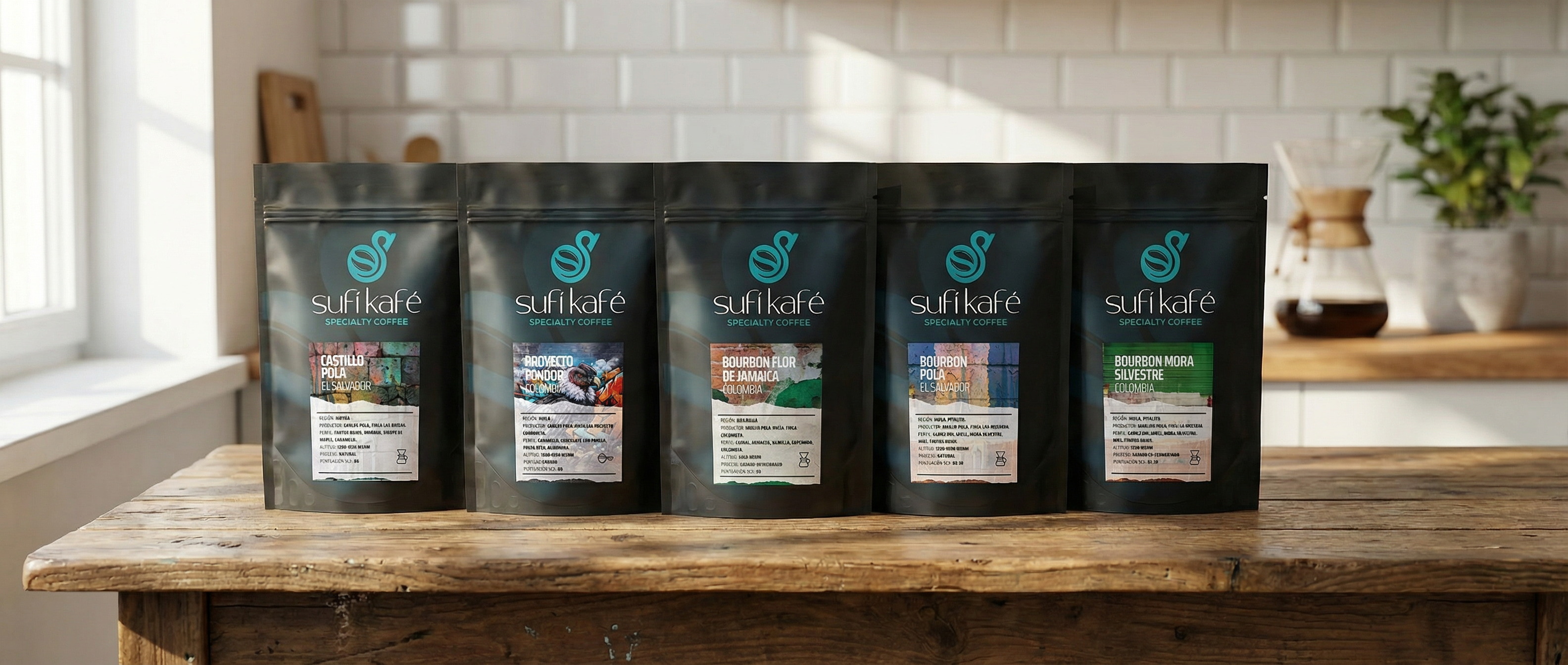
From our catalog, the Proyecto Cóndor is a traditional washed coffee.
Honey
You depulp the cherry but do not remove all the mucilage (the sticky pulp around the bean). The bean dries with that honey attached. Cup result: more body, deep sweetness, round cup. More caramelized than a washed coffee.
There are subcategories depending on how much mucilage you leave: white honey (little), yellow honey, red honey, black honey (much). The more mucilage, the sweeter and more complicated to dry.
Our Bourbon Pola El Salvador is a honey.
Natural
The cherry dries whole, with the pulp on, for weeks. The bean absorbs the sugar and aromas from the pulp as it dehydrates. Cup result: very fruity, sweet, wine-like, notes of strawberry, blackberry, ripe fruit. Ethiopia produces the most well-known naturals.
Anaerobic
A twist from the last 10 years. The cherry (whole or depulped) is placed in closed tanks without oxygen for hours or even days. The fermentation is controlled with CO₂ and specific bacteria.
Cup result: very intense profiles, marked fermentations, exotic notes (black cherry, rum, spices, berries). It's the trendy process in competition coffee.
Our Castillo Pola El Salvador is a natural anaerobic coffee from 8 days — the cherry fermented whole in a tank without oxygen for eight days before drying in the sun. The cup features clear notes of black cherry, panela, cacao, and red grapes.
Co-fermented
A recent variant of anaerobic: during fermentation, an external ingredient (fruits, yeasts, flowers) is added so that its aromas are incorporated into the bean.
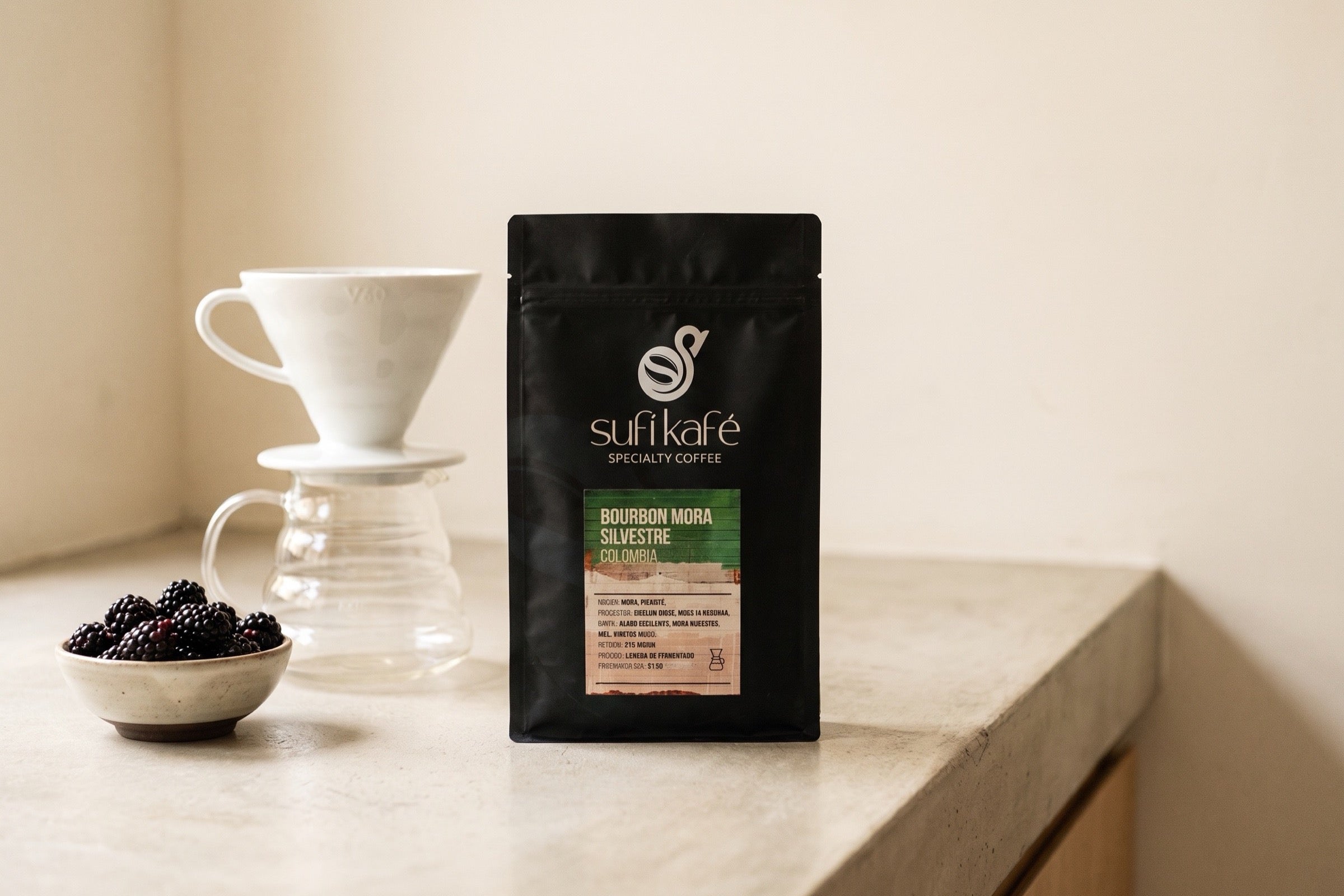
Our Bourbon Flor de Jamaica is a washed co-fermented with hibiscus. And the Bourbon Mora Silvestre is a two-phase co-fermented coffee (96 h submerged + 48 h in mucilage) that extracts all the character of forest fruit.
Which one suits you
- If you like coffee that is clean, bright, transparent → washed.
- If you want body and sweetness without going overboard → honey.
- If you enjoy intense fruit → naturals.
- If you want to experiment to the fullest → anaerobics and co-fermented.
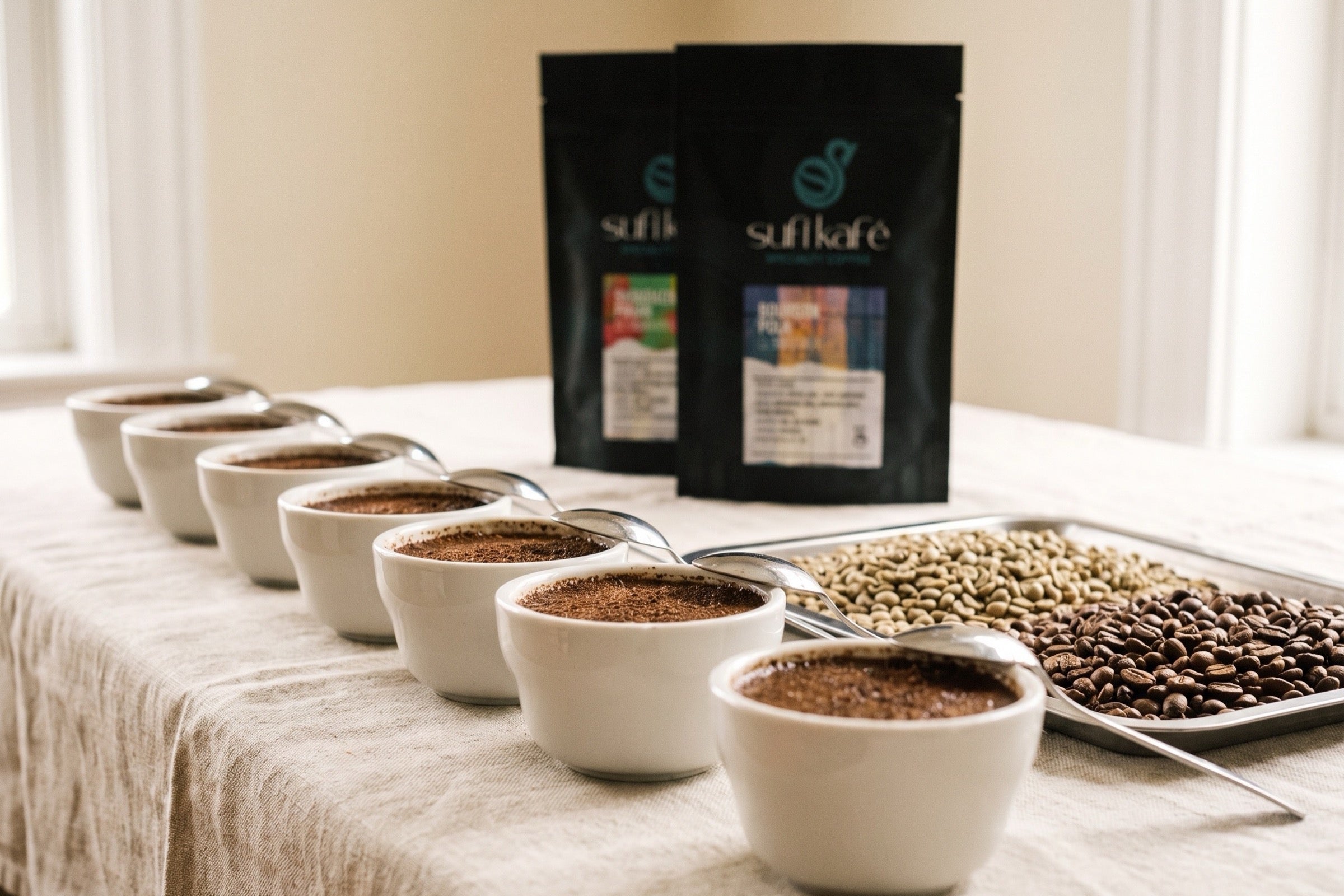
The best way to understand the processes is to try several using the same preparation method. Our Tasting Pack includes two different processes from the same producer (Carlos Pola: anaerobic and honey) and two co-fermented coffees from Colombia, all to be prepared in V60.